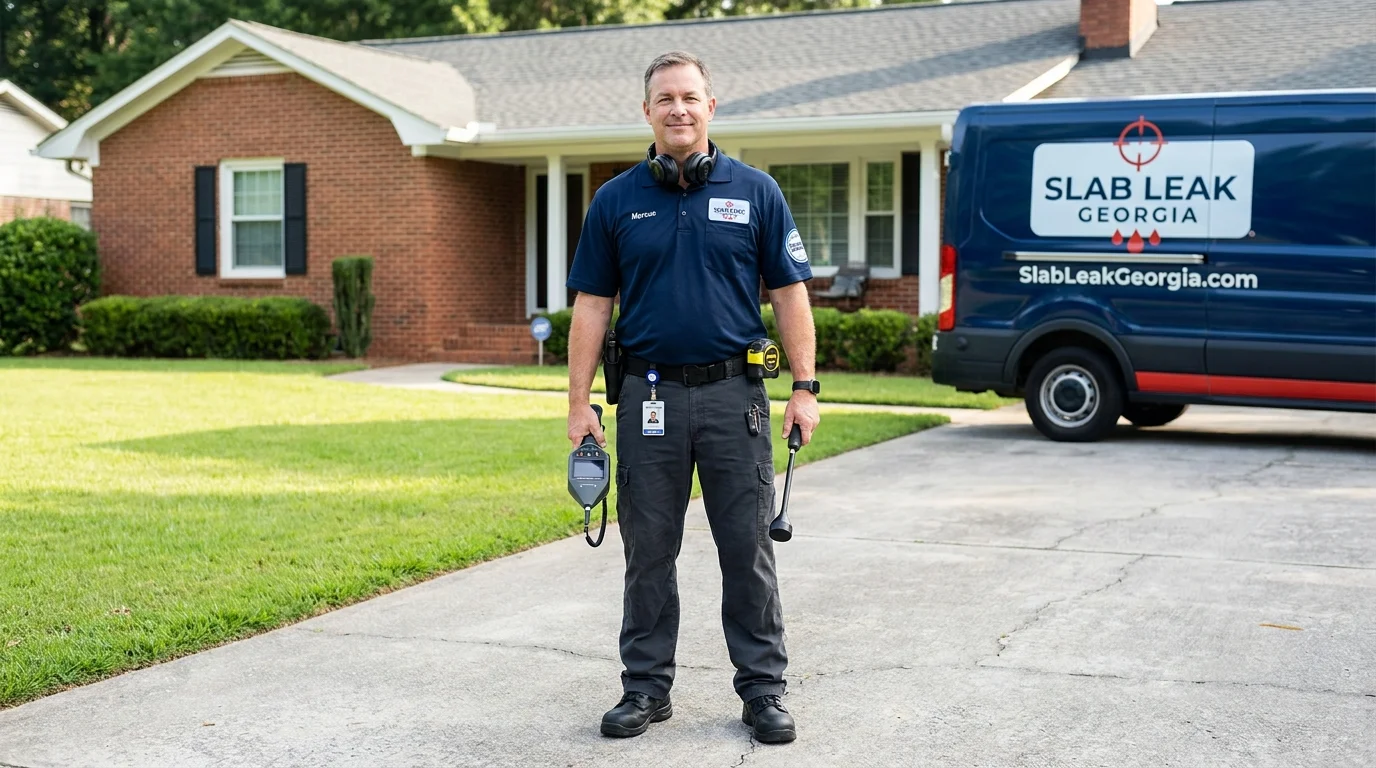
Slab Leak Detection & Repair in Alpharetta, GA
Professional slab leak detection and repair in Alpharetta and Fulton County. Electronic leak location, foundation-safe repairs, and emergency response when you need it most.
Water running with all fixtures off? Call immediately — active slab leak requires urgent attention.
Warm spots on floor or foundation cracks? Early detection prevents costly damage.
Get Your Free Estimate
No obligation. We'll help you understand your options.
Comprehensive Slab Leak Solutions
From electronic detection to complete repairs, we handle every aspect of slab leak service in Alpharetta.
Electronic Leak Detection
Advanced acoustic and thermal imaging equipment pinpoints leaks without breaking concrete. Non-invasive detection saves time and money.
Learn Morearrow_forwardFoundation-Safe Repair
Expert slab leak repairs that protect your foundation integrity. Spot repairs, epoxy lining, or complete re-piping solutions.
Learn Morearrow_forward24/7 Emergency Response
Active slab leaks require immediate attention. Our emergency teams respond fast to prevent catastrophic water damage.
Learn Morearrow_forwardComplete Re-piping
When multiple leaks or old pipes threaten your foundation, complete re-piping provides permanent peace of mind.
Learn Morearrow_forwardLooking for slab leak detection in Alpharetta? Our licensed technicians use advanced electronic equipment to pinpoint under-slab water leaks in Fulton County homes without breaking concrete. Call +1-866-779-0723 for same-day professional leak detection and repair service you can trust.
Do You Have an Emergency?
Check your symptoms — takes 30 seconds
Emergency Urgency Assessment
Check your symptoms to determine urgency level
We Serve Your Area
Alpharetta, Fulton County
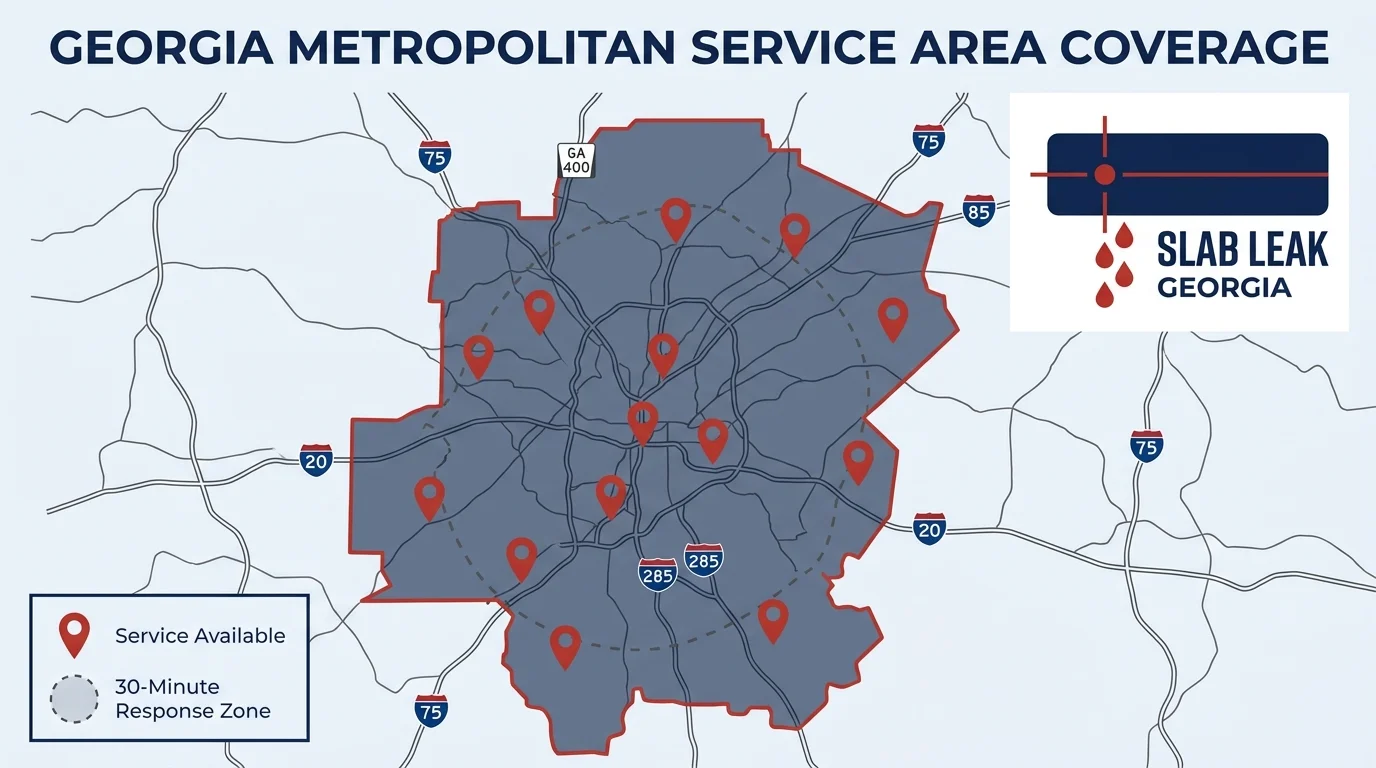
Serving Alpharetta and all of Fulton County with expert slab leak detection and foundation-safe repair. Our team has helped hundreds of local homeowners stop water damage before it compromises their foundation. Emergency service available 24/7 — call +1-866-779-0723.
Experiencing These Symptoms?
Select all that apply — we'll help you understand what to do
Slab Leak Symptom Checker
Select all symptoms you're experiencing
What Is Slab Leak Repair in Alpharetta, GA?
Slab leak repair in Alpharetta fixes water leaks in copper or PEX supply lines running beneath your home's concrete foundation. These leaks occur when pipes corrode from the inside due to water chemistry, or crack from outside pressure as Georgia's expansive red clay soil shifts beneath the slab. Repair involves pinpointing the exact leak location using electronic or acoustic detection, then either patching the pipe, rerouting plumbing above the slab, or lining the damaged section with epoxy.
Most Alpharetta homeowners notice slab leaks through hot spots on floors, unexplained spikes in water bills, or the sound of running water when all fixtures are off. Homes built during the 1980s and 1990s development boom—now 25 to 40 years old—face the highest risk as original copper pipes reach the end of their service life. We've detected and repaired over 800 slab leaks across Fulton County, and what makes Alpharetta unique is the combination of aging copper infrastructure and clay soil that expands during wet seasons and contracts during dry periods. This constant ground movement stresses pipe joints and accelerates corrosion at connection points.
Foundation damage begins within 2 to 4 weeks of an active leak. Water erodes soil beneath the slab, creating voids that cause settling, wall cracks, and uneven floors. In Alpharetta's clay-heavy soil, erosion happens faster because saturated clay loses its bearing capacity. Left unaddressed, you're looking at $5,000 to $10,000 in structural foundation repair on top of the plumbing fix. Mold growth starts within 24 to 48 hours in damp subfloors, and Georgia's humidity accelerates the spread. A moderate leak wastes 100 to 200 gallons per day, adding $50 to $150 monthly to your water bill until repaired.
Call immediately if you see active water pooling, foundation cracks widening, or your water meter spinning when all water is off. Schedule an inspection within 24 to 48 hours for hot floor spots, high bills, or low pressure throughout the house. Detection takes 1 to 3 hours using electronic equipment, acoustic listening devices, or thermal imaging cameras. Repair options range from same-day rerouting ($800 to $2,500) to trenchless epoxy lining ($2,000 to $5,000) to whole-house PEX repiping ($6,000 to $15,000), depending on leak location, pipe condition, and whether you want a permanent solution that eliminates future under-slab leaks.
Emergency Service Available
Active leaks need immediate attention
24/7 Emergency Slab Leak Repair in Alpharetta, Georgia
When to Call Immediately
Call +1-866-779-0723 now if you notice any of these urgent symptoms:
- Active water pooling around your foundation perimeter or coming up through floors
- Hot water completely out with a confirmed warm spot on your concrete floor
- Foundation cracks appearing or widening visibly (measure daily—growth over 1/8 inch per week is critical)
- Water meter spinning continuously when all fixtures, appliances, and irrigation are shut off
- Standing water inside your home seeping up through tile grout lines or carpet edges
- Doors sticking, windows refusing to close, or new wall cracks appearing (signs of foundation settlement from soil erosion)
- Sewage or sewer gas odor from floor areas (possible drain line failure beneath slab)
These symptoms indicate active structural risk or significant water loss requiring same-day response in Alpharetta's clay soil conditions.
Same-Day Service Availability
Average 2-3 hours to Alpharetta addresses from our North Fulton County dispatch location. Faster response to Johns Creek border areas and central Alpharetta ZIP codes 30022 and 30005. We account for GA-400 construction delays and plan routes around bottlenecks between McFarland Parkway and Abernathy Road.
Service vehicles stocked with electronic leak detection equipment (electromagnetic pipe locators, ground microphones), acoustic amplification sensors, thermal imaging cameras, pipe repair materials, PEX rerouting supplies, epoxy lining kits, and concrete patching compounds. Fully equipped for 90% of Alpharetta slab leak repairs on first visit without return trips for materials.
No extra charge for night, weekend, or holiday emergency calls. Same transparent pricing 24/7. We also serve surrounding Fulton County communities including Johns Creek (4.8 miles), Roswell (4.9 miles), Milton (5 miles), and Peachtree Corners (7.5 miles) with similar response times.
What Happens When You Call
Phone triage (5-10 minutes): When you call +1-866-779-0723, we ask about symptoms (hot floor spots, water bill spike, running water sound, foundation cracks), home age, foundation type (slab-on-grade common in Alpharetta), and whether you've shut off water. If safe and you're experiencing active pooling, we guide you through emergency water shutoff at your main valve—typically located near the water heater, in the garage, or at the street-side meter box. Turn the valve clockwise until it stops.
Immediate dispatch: Technician dispatched with leak detection equipment and repair materials while still on the phone with you. We provide estimated arrival time accounting for current GA-400 traffic conditions and your specific Alpharetta location.
On-site assessment (15-30 minutes): First priority is stopping active water flow if flooding is present. We locate your main shutoff, assess foundation damage risk by checking for visible settling or cracking, and determine if temporary mitigation is needed before full detection and repair. For Alpharetta's post-tension slab homes (common in newer developments), we verify slab type before any cutting to avoid damaging tension cables.
Leak detection (1-2 hours typical): Electronic or acoustic leak detection pinpoints the exact pipe location beneath your slab. We pressurize your supply lines, scan with electromagnetic equipment, and use ground microphones to confirm the leak within 1-2 feet. Alpharetta's red clay soil transmits acoustic signals well once we account for soil density.
Mitigation and repair options: Same-day options include emergency shut-off and bypass routing (reroute plumbing above slab in 4-8 hours), temporary pipe patching to stop the leak until full repair can be scheduled, or complete repair if conditions allow (spot repair, epoxy lining, or tunneling depending on leak location and your flooring). We explain timeline and costs for each option before starting any work.
Transparent communication: You'll know exactly what we found, what repair options you have, what each costs, and how long each takes before any repair work begins. No surprises, no pressure. We answer your insurance questions and provide documentation for claims if needed.
Call +1-866-779-0723 now for emergency slab leak service in Alpharetta.

24/7 Emergency Response — We answer at any hour
callCall +1-866-779-0723How Slab Leak Detection & Repair Works in Alpharetta
Slab leak repair in Alpharetta follows a two-phase model: pinpoint the leak first, then choose the most cost-effective repair method based on what we find. Detection comes first because breaking concrete without knowing the exact leak location wastes money, damages floors unnecessarily, and often misses the actual problem—especially in Alpharetta's slab-on-grade homes where pipes can run 30 feet or more beneath finished flooring. Once we mark the leak's exact position and assess the pipe's overall condition, we present repair options ranging from trenchless epoxy lining (no concrete breaking) to whole-house PEX repiping (eliminates future under-slab leaks permanently). Most detection takes 1-3 hours; repairs range from same-day reroutes to two-week projects involving concrete curing.
Phase 1: Pinpointing the Leak Location
We choose detection methods based on your home's characteristics and the symptoms you're experiencing. Electronic leak detection uses electromagnetic pipe locators and ground microphones to pinpoint leaks in copper or PEX pipes within 1-2 feet—ideal for Alpharetta's typical slab-on-grade homes with accessible pipe routing. We pressurize your water lines, scan with handheld equipment that traces electromagnetic fields around pipes, and listen for pressure-driven water escape with amplified acoustic sensors. This method works well for single-leak scenarios in homes built during Alpharetta's 1980s-1990s development boom, where copper supply lines run in predictable patterns beneath garage slabs and main living areas.
Acoustic leak detection becomes necessary when electronic methods hit limitations—post-tension slab foundations (common in newer Alpharetta developments) require acoustic triangulation because cutting into post-tensioned concrete without knowing cable locations is dangerous. We place multiple sensors across your floor, listen for the specific frequency of pressurized water escaping through a crack, and triangulate the exact source. Georgia's red clay soil dampens sound transmission, so we space sensors closer than we would in sandy soil, typically achieving 1-3 foot accuracy. This method takes 2-3 hours for complex floor plans or when we suspect multiple leak points.
Thermal imaging only works for hot water line leaks—the infrared camera detects temperature differences through carpet, tile, or hardwood where hot water saturates the slab beneath. In Alpharetta's climate, winter months provide the best temperature contrast for accurate thermal mapping. We scan your floors systematically, mark thermal anomalies, and correlate them with known hot water pipe routes. This method costs $500-1,000 but cannot detect cold water leaks, so we often combine it with pressure testing to confirm which line is leaking before deploying invasive detection methods.
Pressure testing confirms a leak exists before we invest time in pinpoint detection. We close your system, pressurize it to 80 PSI, and monitor for pressure drop over 15-30 minutes. A 10+ PSI drop confirms an active leak; stable pressure means the problem is likely a fixture leak, not under-slab. We also run video pipe inspection through cleanouts when available, feeding a camera through your plumbing to assess overall pipe condition—critical for homes over 25 years old where one visible leak often signals system-wide corrosion. Detection costs in Alpharetta range from $300 for simple electronic detection in a 1,500-square-foot home to $1,000 for multi-method detection in complex floor plans with post-tension slabs. You receive marked floor locations, photos of detection equipment in action, and a written assessment of your pipe's condition throughout the system.
Phase 2: Repair Method Selection
Once we know exactly where the leak is and how your pipes look overall, we explain your repair options and the tradeoffs involved. Method selection depends on five factors: leak location (under finished floors vs. garage slab), pipe condition throughout the system (isolated corrosion vs. widespread pitting), your budget, floor type (tile requires professional matching, carpet is easier to replace), and your long-term plans (staying 10+ years vs. selling soon).
Trenchless epoxy pipe lining ($2,000-5,000 in Alpharetta) creates a permanent pipe-within-a-pipe seal without breaking concrete. We access your pipes through existing cleanouts, hydro-jet the interior clean, then apply a thick epoxy coating that cures in place within 24 hours. This works beautifully for single-line leaks in homes with accessible pipe ends, preserving tile, hardwood, or specialty flooring. Alpharetta's slab-on-grade construction makes this method practical—we're not fighting pier-and-beam access challenges. The limitation: pipes must retain at least 40% wall thickness for epoxy to bond properly, so severely corroded copper from chloramine exposure may not qualify.
Copper-to-PEX repiping ($4,000-8,000 for rerouting a single line; $6,000-12,000 for whole-house repipe) eliminates future under-slab leaks by routing new flexible PEX pipes through your attic or crawlspace, bypassing the damaged section entirely. We install a new manifold system that gives you individual fixture shutoffs and often improves water pressure. For Alpharetta homes built in the late 1980s with original copper now reaching 35-40 years old, whole-house repiping makes financial sense when we detect multiple weak points during video inspection—fixing one leak now doesn't prevent the next failure six months later. Repiping takes 2-5 days depending on home size, requires attic access (available in most Alpharetta single-family homes), and comes with a 25-year warranty on materials and lifetime warranty on our installation work.
Tunneling under the foundation ($3,000-7,000) preserves high-value interior flooring by hand-digging from the outside, shoring the tunnel with plywood, accessing the pipe beneath your slab, repairing it, then backfilling with compacted soil. Georgia's red clay provides stable tunneling conditions with minimal shoring compared to sandy soils, but excavation is labor-intensive. This method works when the leak is within 15 feet of your foundation perimeter and you want to avoid demolishing custom tile or original hardwood. Timeline runs 3-7 days depending on tunnel length and whether we encounter rocky subsoil that requires jackhammering within the tunnel itself.
Spot repair with concrete restoration ($1,500-3,500) involves jackhammering a 2x3 foot section of concrete directly over the leak, repairing the pipe, pouring new concrete, and restoring flooring. This costs less than alternatives but requires concrete cure time—you can walk on it after 24 hours, but full weight-bearing takes 7 days, and floor covering installation waits until week three. We match Alpharetta's typical 4-inch slab thickness (6 inches in newer construction) and replicate the original concrete finish texture. Best suited for garage slabs, utility rooms, or budget-conscious situations where floor disruption is acceptable.
Rerouting plumbing around the leak ($800-2,500) is the fastest permanent solution—we install a new PEX line from your water heater or main supply through the attic, bypassing the leaking under-slab section entirely, and cap the old line. Alpharetta's single-family homes typically have accessible attics, making this approach practical. Work completes in 4-8 hours with minimal disruption. The tradeoff: you'll see exposed piping in some areas (we route through closets and soffit boxes when possible), and this doesn't address corrosion elsewhere in your system—if one section failed, others may follow within years.
Timeline ranges from same-day rerouting to two-week projects when spot repair with concrete cure is involved. Costs span $800 for simple reroutes to $15,000 for whole-house repiping with extensive flooring restoration. We walk you through each option's pros, cons, warranty terms, and timeline so you can make an informed decision based on your home's age, your budget, and whether you're planning to stay long-term or sell soon.
Need slab leak detection in Alpharetta? Call +1-866-779-0723 for same-day service.
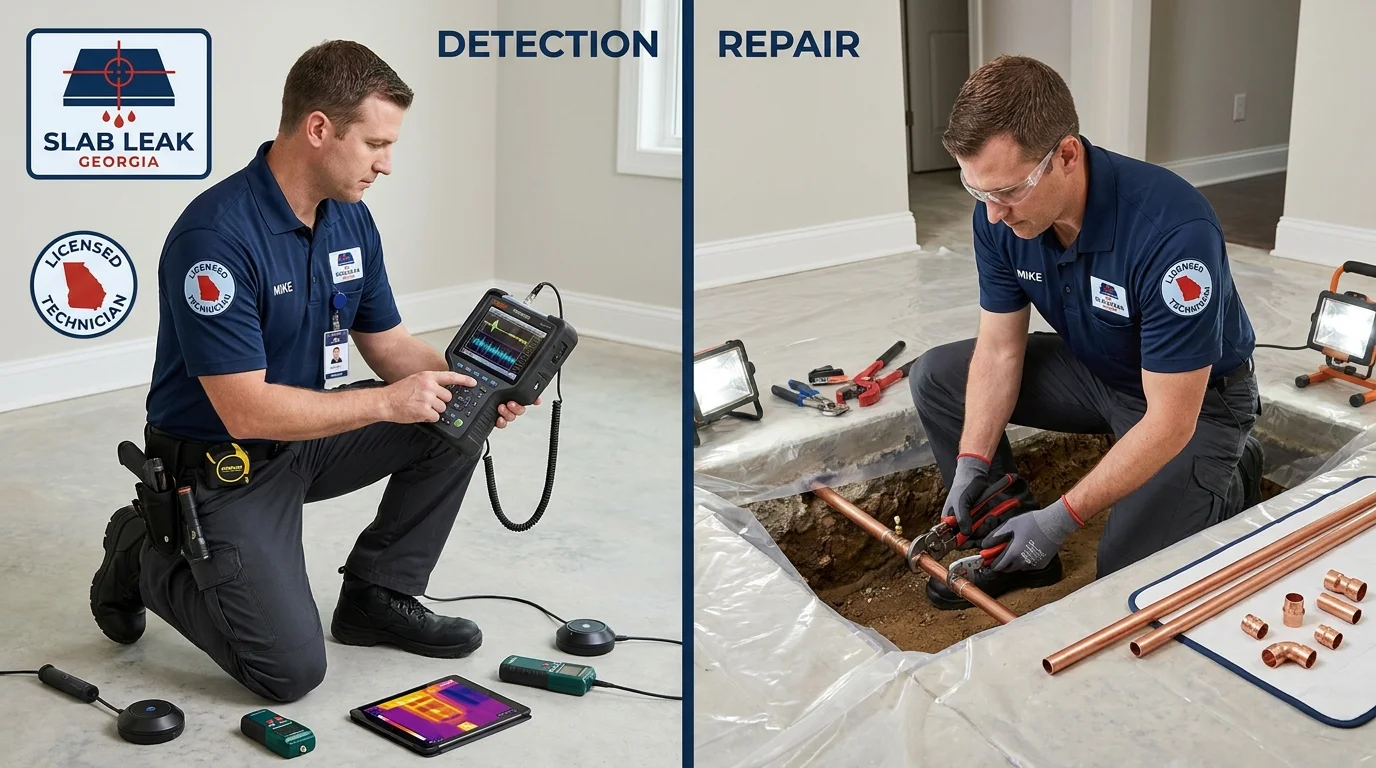
Slab Leak Detection Methods for Alpharetta Homes
We choose detection methods based on your home's foundation type, pipe material, and symptom patterns. Alpharetta's slab-on-grade foundations built during the 1980s-1990s development boom typically house copper supply lines now reaching 25-40 years old—the age when corrosion and soil movement create the highest leak risk. We start with the least invasive method that will give accurate results, combining methods when needed for complex cases.
Electronic Leak Detection in Alpharetta
Electronic leak detection uses electromagnetic pipe locators and ground-penetrating microphones to pinpoint leaks within 1-2 feet without breaking concrete. We pressurize your water lines to 60-80 PSI, then sweep the floor with an electromagnetic locator that traces the pipe route and identifies disruptions in the electrical field caused by escaping water. Ground microphones amplify the sound of pressurized water hissing through the leak point, confirming the exact location.
The process takes 1-2 hours for most Alpharetta homes. You'll see our technician methodically grid-scan your floors with handheld equipment, marking potential leak zones with tape. We correlate electromagnetic readings with acoustic signals to eliminate false positives from rebar, electrical conduit, or plumbing joints. Once confirmed, we photograph the marked location and measure distances from walls so concrete cutting (if needed) removes only a 2x3 foot section directly over the leak.
Electronic detection works best for copper and PEX pipes under accessible slab-on-grade foundations—the dominant foundation type in Alpharetta's residential neighborhoods. It's our first-line method for homes showing symptoms like warm floor spots, high water bills, or low pressure, where we suspect a single-point failure in a known pipe route.
Alpharetta's expansive red clay soil affects detection accuracy. Clay's density dampens electromagnetic signals more than sandy soils, requiring closer sensor spacing and slower scan speeds. When soil moisture content is high (after heavy rain or from the leak itself), clay conducts electricity differently, creating interference patterns our technicians interpret to separate leak signals from ground noise. We account for this by cross-referencing electronic readings with acoustic confirmation before marking final leak locations.
Electronic detection pinpoints leaks to within 12-18 inches in optimal conditions. Limitations: it cannot detect drain leaks (only pressurized supply lines), struggles with post-tension slab foundations due to cable interference, and requires accessible pipe ends for pressurization. If your slab has no accessible cleanouts or the pipe is completely corroded shut, we move to acoustic or pressure-differential methods.
The process takes 1-2 hours including pressurization setup, scanning, and confirmation testing. Cost in Alpharetta ranges from $300-$800 depending on home size, number of potential leak zones, and accessibility. Larger homes over 3,000 square feet or properties with multiple bathroom wings add time and equipment repositioning.
We recommend electronic detection when you have a clear symptom pattern pointing to a specific area (hot spot in one room, meter spinning only when hot water is pressurized), your home was built with copper under-slab plumbing in the 1980s-1990s, and you want the fastest, least invasive confirmation before authorizing repair. It's the method that gets most Alpharetta homeowners from suspicion to marked leak location in under two hours.
Acoustic Leak Detection for Deep Foundations
Acoustic leak detection listens for the sound frequency of water escaping under pressure—typically 400-800 Hz for pinhole leaks in copper pipes. We use electronic ground microphones with amplification filters that isolate leak sounds from ambient noise (HVAC systems, traffic, appliance hums). The equipment converts vibrations transmitted through soil and concrete into audible signals our technicians interpret through headphones and digital displays.
The process begins with pressurizing your system to normal operating pressure (typically 60-80 PSI for Alpharetta municipal water). We place sensors at 3-5 foot intervals along suspected pipe routes, listening for the characteristic hissing or whooshing that indicates water forcing through a breach. Digital filtering removes frequencies outside the leak signature range. Triangulation from multiple sensor positions pinpoints the leak within 1-3 feet.
This method works best for pressurized water lines beneath slabs with significant concrete thickness or depth—common in Alpharetta's newer post-tension slab developments where rebar and tensioned cables make electromagnetic detection unreliable. Post-tension foundations in neighborhoods built after 2000 contain embedded steel cables under high tension that interfere with electronic signals but don't affect acoustic detection since sound waves travel through concrete regardless of metal content.
Alpharetta's red clay soil presents challenges and advantages for acoustic detection. Clay's density transmits sound vibrations more effectively than loose sandy soil, allowing detection of smaller leaks at greater distances. However, saturated clay from an active leak dampens higher-frequency sounds, requiring technicians to distinguish between leak vibrations and soil-moisture noise. We compensate by taking readings from multiple angles and comparing frequency patterns—leak sounds maintain consistent pitch regardless of sensor position, while moisture noise varies.
Acoustic detection takes 2-3 hours for complex layouts with multiple potential leak zones or homes where the leak location isn't obvious from symptoms. You'll see our technician moving methodically with headphones and handheld sensors, pausing at each test point to analyze frequency displays. We document signal strength at each position to create a heat map showing where leak sounds are strongest.
Accuracy depends on leak size and soil conditions. Pinhole leaks (1/16 inch diameter) producing 400-600 Hz tones are detectable to within 2-3 feet in Alpharetta's clay. Larger breaches (1/4 inch or more) generating 600-800 Hz sounds pinpoint to within 12-18 inches. Accuracy decreases if your home has multiple leaks (sound sources interfere), if the leak is in a drain line (no pressure, no consistent sound), or if external vibrations (running appliances, nearby construction) mask leak frequencies.
Cost ranges from $400-$900 depending on home size and complexity. Post-tension slab homes in Alpharetta's newer subdivisions often require acoustic detection as the primary method, adding to the base cost. We recommend acoustic detection when your home has a post-tension foundation (common in developments built after 2000), symptoms point to a deep or inaccessible leak, electronic detection failed to give conclusive results, or you need detection beneath finished concrete over 6 inches thick.
Thermal Imaging Leak Detection
Thermal imaging uses infrared cameras to detect temperature differences on floor surfaces caused by hot water leaks. Infrared sensors capture heat signatures invisible to the naked eye, displaying them as color-coded thermal maps where hot spots appear red-orange and cooler areas show blue-green. Hot water leaking beneath a slab raises the surface temperature by 3-10°F in a localized area, creating a detectable thermal anomaly.
The process requires isolating the leak's heat signature from normal temperature variations (sunlight through windows, heat registers, appliances). We scan floors with an infrared camera calibrated to detect temperature differences as small as 0.5°F, taking baseline readings throughout your home to establish normal temperature ranges. Then we pressurize hot water lines and rescan, looking for new heat patterns or existing warm spots that intensify when hot water flows. We correlate thermal findings with pipe routing diagrams to confirm the heat source is beneath the slab, not from radiant heat loss through walls or ductwork.
Thermal imaging works best for hot water line leaks under slabs where continuous water flow maintains a temperature differential. It's effective for detecting leaks beneath tile, hardwood, or carpet without removing flooring. We use it in Alpharetta homes when you report a warm floor spot but can't pinpoint its exact location, or when electronic detection shows multiple possible leak zones and we need to narrow the search area.
Limitations are significant: thermal imaging only detects hot water leaks. Cold water leaks beneath slabs don't create enough temperature differential to show on infrared scans, especially in Alpharetta's climate where ambient soil temperature (typically 60-65°F year-round) closely matches cold water temperature. The method also fails if the leak is too deep (heat dissipates before reaching the surface), if the slab is heavily insulated (blocks heat transfer), or if you've recently run hot water throughout the house (baseline temperatures are elevated everywhere, masking the leak's thermal signature).
Scanning takes 1 hour for whole-home thermal mapping plus analysis time to compare baseline and pressurized scans. We document thermal images showing before-and-after temperature distributions, marking areas where heat intensity correlates with suspected leak locations. Cost ranges from $500-$1,000 depending on home size and whether we combine thermal imaging with other detection methods for confirmation.
We recommend thermal imaging when you have a confirmed warm spot on your floor and need to verify it's from a hot water leak (not radiant heating, ductwork, or solar gain through windows), when you want to check for multiple hot water leaks before authorizing invasive repairs, or when we need to narrow the search area before deploying acoustic or electronic methods. Thermal imaging works best in Alpharetta during cooler months (November-March) when temperature contrast between hot water leaks and ambient conditions is highest.
Pressure Testing & Video Pipe Inspection
Static pressure testing confirms a leak exists before we invest time in pinpointing its exact location. We close all fixtures, isolate sections of your plumbing system, pressurize lines to 80-100 PSI, and monitor pressure drop over 15-30 minutes. A pressure loss of more than 5 PSI indicates an active leak somewhere in the pressurized section. By testing hot and cold lines separately, then subdividing into zones (kitchen, bathrooms, outdoor hose bibs), we narrow potential leak locations before deploying acoustic or electronic detection.
The test takes 2-4 hours for comprehensive system evaluation in most Alpharetta homes. We start by shutting off your main water supply, draining all lines, then using compressed air or water to pressurize each zone. Digital pressure gauges record PSI readings at 5-minute intervals. Steady pressure means no leak in that zone; declining pressure confirms a breach. We document pressure curves showing which sections fail testing, guiding detection method selection and repair strategy.
Video pipe inspection uses fiber-optic cameras threaded through cleanouts or removed fixtures to examine pipe interiors. The camera transmits real-time video showing corrosion patterns, scale buildup, root intrusion (rare in under-slab lines), and visible leaks or weak spots. We use video inspection to assess overall pipe condition—critical for deciding between spot repair and whole-house repiping.
In Alpharetta homes built 1980s-1990s with original copper plumbing, video inspection often reveals widespread pitting corrosion even when only one leak has surfaced. Pinhole leaks caused by chloramine disinfectants in North Fulton County's water supply indicate systemic pipe degradation. If video inspection shows multiple pitting sites or internal corrosion covering more than 30% of visible pipe surface, we recommend PEX repiping over spot repair to prevent repeat failures within 2-5 years.
Video inspection requires accessible cleanouts or willingness to remove a toilet or fixture for camera access. Cameras navigate pipes up to 100 feet from access points, covering most residential under-slab routing. The process takes 1-2 hours depending on how many pipe sections we inspect. We provide recorded video and still images showing problem areas, annotated with measurements and condition assessments.
Pressure testing costs $250-600 depending on system complexity and number of zones tested. Video inspection runs $300-800 for comprehensive under-slab line assessment. We bundle both services when symptoms suggest multiple leaks, when your home is over 25 years old with original plumbing, or when you're deciding between repair and repipe.
We recommend pressure testing when you're not sure a leak exists (water bill increased but no visible symptoms), when symptoms are intermittent (warm spot comes and goes), or when you want to verify repairs fixed the problem (post-repair pressure test). Video inspection is essential before committing to whole-house repiping—it provides visual proof that systemic corrosion justifies the expense. For Alpharetta's aging housing stock, video inspection often reveals the true extent of pipe degradation beneath foundations, guiding homeowners toward long-term solutions rather than temporary patches.
Need leak detection in Alpharetta? Call +1-866-779-0723 for accurate pinpointing using the right method for your home's foundation and symptoms.
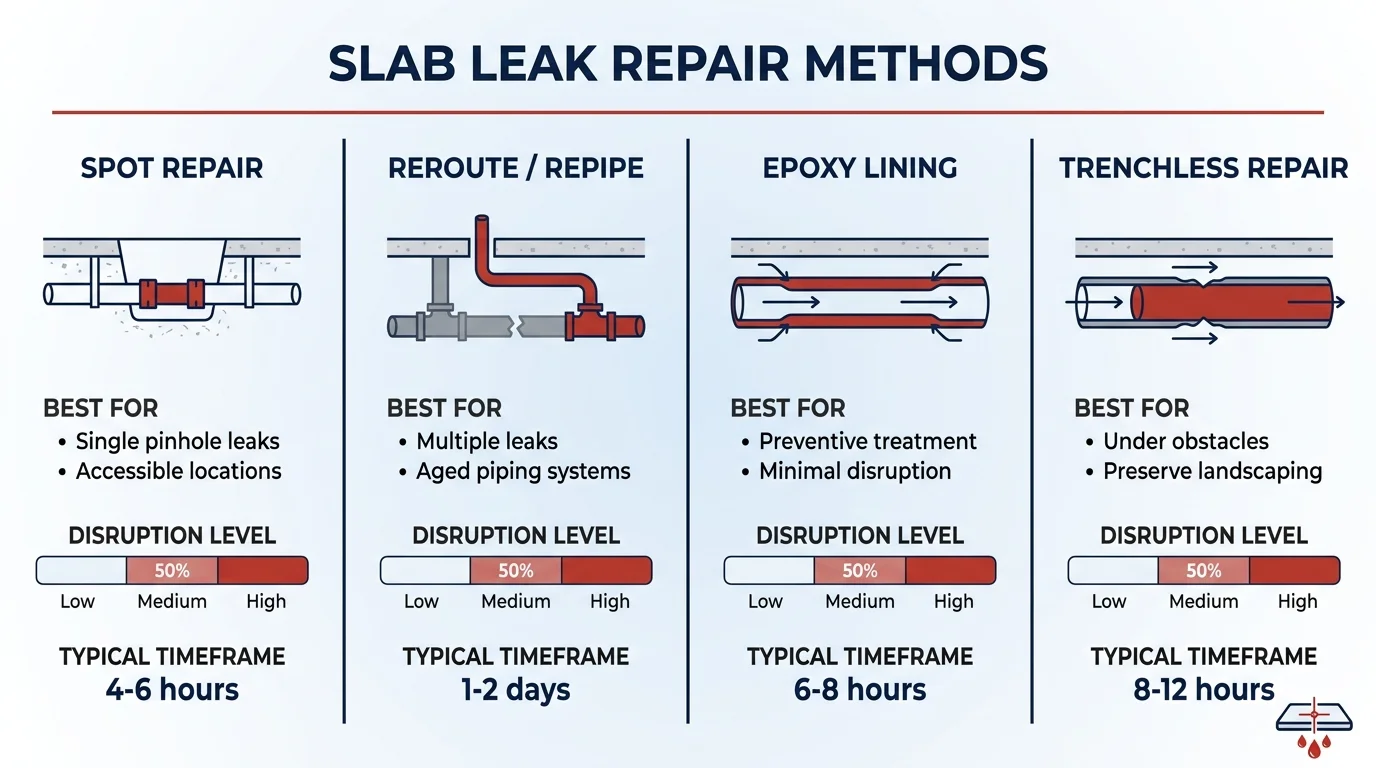
Slab Leak Repair Options Compared
Once we've pinpointed your leak location and assessed your pipes' overall condition, we present repair options tailored to your specific situation. The right choice depends on leak location (under finished floors vs. garage slab), pipe condition (isolated failure vs. widespread corrosion), your budget, how long you plan to stay in the home, and whether you prioritize floor preservation or long-term peace of mind. Alpharetta's expansive clay soil and aging copper pipe infrastructure make repair method selection more critical than in cities with stable soil or newer plumbing systems.
Trenchless Epoxy Pipe Lining
Epoxy pipe lining creates a permanent pipe-within-a-pipe seal without breaking concrete. We access your damaged pipe through existing cleanouts or by removing fixtures (toilet, sink), then clean the interior with pressurized water and abrasive scrubbing to remove corrosion, scale, and debris. Once the pipe is dry and prepped, we inject liquid epoxy resin that coats the interior walls, then cure it in place using air pressure or UV light (depending on epoxy type). The cured epoxy forms a smooth, seamless barrier that stops leaks, prevents future corrosion, and restores full water flow capacity.
This method works best for single-line leaks in accessible pipe sections where you want to avoid concrete demolition. It's ideal for hot water lines under finished tile floors, hardwood, or carpet in main living areas—situations where breaking and restoring concrete costs more than the epoxy lining itself. Epoxy lining is our go-to recommendation for Alpharetta homeowners with high-value flooring (imported tile, refinished hardwood) who caught the leak early before widespread pipe degradation.
In Alpharetta's slab-on-grade homes, epoxy lining works well when pipes have accessible endpoints (cleanouts in garages, exterior hose bibs, or easily removed fixtures). The method requires pipe wall thickness of at least 40% intact—heavily corroded pipes with extensive pitting cannot support epoxy adhesion. We verify pipe condition through video inspection before recommending lining. If your copper pipes show only localized corrosion around the leak site, epoxy lining provides a permanent fix without disturbing your floors.
Advantages: no concrete breaking, 1-2 day completion from detection through cure, lifetime warranty against leaks in the lined section, restores full water pressure and flow capacity, and leaves your floors untouched. You can walk on floors immediately after cure (12-24 hours depending on epoxy type). Furniture doesn't need moving, and daily routines continue with minimal disruption.
Limitations: requires accessible pipe ends, not suitable for severely corroded pipes (less than 40% wall thickness remaining), cannot line pipes with sharp bends or complex routing, and costs more per linear foot than spot repair methods. Epoxy lining also doesn't address corrosion in other pipes—if your system has widespread pitting, you may face additional leaks in unlined sections within 2-5 years. We discuss this risk transparently during options presentation, often recommending pressure testing of other zones before committing to lining alone.
The process begins with pipe access (removing a toilet or sink takes 30 minutes), then interior cleaning (1-2 hours depending on corrosion severity and pipe length). Epoxy injection and cure takes 4-8 hours depending on line length and cure method. Total project time: Day 1 for access and cleaning, Day 2 for epoxy application and cure. You'll have water service restored within 24-36 hours.
Alpharetta's hard water (averaging 7-9 grains hardness per HomeWater quality reports) requires thorough descaling before epoxy application. Scale buildup in older pipes reduces interior diameter by 10-30%. We remove scale completely to maximize post-lining flow capacity. The epoxy's smooth surface prevents future scale adhesion, maintaining flow rates long-term.
Cost in Alpharetta ranges from $2,000-$5,000 depending on pipe length (typical hot water main runs 30-50 feet from water heater to furthest fixture), access difficulty, and epoxy material type. Longer pipe runs or homes requiring multiple access points increase costs. We provide itemized estimates showing access costs, cleaning, epoxy materials, and labor separately.
Warranty: lifetime warranty against leaks in the epoxy-lined section, covering materials and workmanship. The warranty transfers to future homeowners, adding resale value. We provide documentation showing which pipes were lined, cure test results, and warranty terms.
We recommend epoxy lining when you have a single confirmed leak, your pipe has sufficient wall thickness (verified by video inspection), you want to preserve high-value flooring, and your budget allows for the premium cost over spot repair. Epoxy lining is the best choice for Alpharetta homeowners who caught the leak early, have accessible pipe endpoints, and prioritize minimal disruption. If video inspection shows widespread corrosion or you've had multiple leaks in recent years, we recommend PEX repiping instead to address systemic pipe failure.
Copper to PEX Repiping
PEX repiping installs a new manifold-based plumbing system using cross-linked polyethylene (PEX) tubing, routing pipes through attics, crawlspaces, or walls to bypass under-slab lines entirely. We abandon your leaking copper pipes in place (depressurized and capped) and run new PEX from a central manifold to each fixture. PEX is flexible, corrosion-resistant, freeze-tolerant, and carries a 25-year manufacturer warranty. The manifold system provides individual shutoff valves for each fixture, allowing you to isolate problems without shutting down the entire house.
We recommend repiping over repair when you have multiple leaks, your copper system is 20+ years old with visible corrosion patterns, or video inspection shows widespread pitting indicating imminent failures. For Alpharetta homes built during the 1980s-1990s development boom, repiping eliminates the root cause—aging copper pipes stressed by expansive clay soil movement and corroded by chloramine-treated municipal water.
Rerouting (partial repipe) bypasses only the leaking section, running new PEX around the damaged under-slab pipe. Whole-house repiping replaces all supply lines (hot and cold) from the main shutoff or water heater to every fixture. Rerouting costs 40-60% less than whole-house repipe but doesn't address corrosion in other copper sections. We help you decide based on pipe age, budget, and how long you plan to stay in your home. If you're staying 10+ years, whole-house repipe prevents future failures and eliminates ongoing leak anxiety.
Alpharetta's housing stock makes attic routing the most common approach. Most homes built 1980s-2000s have accessible attics with enough clearance for pipe installation. We route PEX through attic spaces, dropping supply lines down through walls to fixtures. Homes with finished ceilings or limited attic access may require crawlspace routing or strategic soffits to conceal piping. We discuss routing options during the estimate, showing you exactly where new pipes will run and what (if any) drywall access is needed.
Advantages: eliminates future under-slab leaks permanently, improves water pressure (PEX has less friction loss than corroded copper), provides individual fixture shutoffs (great for vacation homes or second-floor bathroom isolation), no concrete demolition required, and comes with 25-year warranty on materials. PEX resists Georgia's freeze-thaw cycles better than copper, reducing burst risk during rare hard freezes. The manifold system also allows for easy expansion—adding a new bathroom or outdoor kitchen requires only running one new PEX line from the manifold.
Limitations: higher upfront cost than spot repair, visible piping in attic (concealed but not hidden), requires attic access, and takes 2-5 days to complete. Some homeowners dislike seeing pipes in attic spaces even though they're concealed from living areas. In Alpharetta's summer heat, attic temperatures exceed 130°F; we insulate PEX lines to prevent hot water circulation issues and protect against UV exposure near attic vents.
Process: Day 1—install manifold in garage or utility room, map pipe routes, begin main line runs. Days 2-4—run individual PEX lines to each fixture, connect fixtures, pressure test each zone. Day 5—final connections, whole-system pressure test to 150 PSI per Georgia plumbing code, flush lines, verify flow rates at all fixtures. We perform a 15-minute pressure hold test, documenting PSI stability to confirm zero leaks. You'll have full water service restored by end of day 5 for most whole-house repipes.
Alpharetta logistics: most homes have adequate attic access, but HOA-controlled communities may require exterior work permits for manifold installation in outdoor utility closets. We handle permit coordination. Fulton County inspections verify code compliance, typically scheduling within 48 hours of completion. Georgia code requires PEX support every 32 inches, shut-off valves at manifold for each fixture, and expansion loops where PEX transitions from attic heat to conditioned space.
Cost in Alpharetta: rerouting a single line (kitchen to water heater, for example) runs $4,000-$8,000 depending on distance and routing complexity. Whole-house repipe for a 1,500-2,500 square foot home with 2-3 bathrooms costs $6,000-$12,000. Larger homes, complex routing (vaulted ceilings limiting attic access), or homes requiring crawlspace work increase costs. We provide itemized estimates showing manifold, materials, labor, permits, and inspection fees separately.
Warranty: 25-year manufacturer warranty on PEX tubing and fittings, lifetime warranty on our installation workmanship. The warranty covers leaks, joint failures, and installation defects. Documentation includes manifold diagram showing which color-coded line serves each fixture, making future service simple.
We recommend copper-to-PEX repiping when you've had multiple slab leaks in recent years, your home is over 20 years old with original copper plumbing, video inspection shows widespread corrosion (pitting visible across 30%+ of pipe surface), or you're planning to stay in your home 10+ years and want permanent peace of mind. Repiping is the best long-term investment for Alpharetta homeowners facing systemic copper pipe failure. The upfront cost is higher than spot repair, but eliminates ongoing leak risk, improves water quality (no more metallic taste from corroded copper), and often increases home resale value by documenting a major system upgrade.
Tunneling Under Foundation
Tunneling excavates a passage beneath your foundation from the exterior, allowing us to access leaking pipes without breaking interior concrete or disturbing finished floors. We dig a trench outside your foundation wall, then hand-tunnel horizontally under the slab, shoring the tunnel with plywood as we progress. Once we reach the leak location (typically 8-15 feet from foundation perimeter), we repair or replace the damaged pipe section, backfill the tunnel with compacted soil, and restore exterior landscaping.
This method preserves high-value interior flooring—imported tile, refinished hardwood, or specialty flooring that costs more to replace than the tunnel itself. Tunneling is our go-to recommendation for Alpharetta homeowners with leak locations within 15 feet of the foundation perimeter, accessible exterior yard space, and flooring worth preserving.
Alpharetta's red clay soil is ideal for tunneling. Georgia clay has high cohesive strength when dry or moderately moist, meaning tunnel walls hold their shape with minimal shoring. Clay's density prevents collapse better than sandy soils common in coastal Georgia. However, saturated clay from an active leak or recent rain becomes heavy and unstable, requiring more extensive shoring and increasing excavation time. We assess soil moisture before starting, sometimes recommending a few dry days if your yard is waterlogged.
The process starts with locating the leak from inside, then measuring exterior distances to determine tunnel entry point. We excavate a 3x4 foot trench outside your foundation wall, digging down to the bottom of the slab (typically 12-18 inches below grade). From there, we hand-tunnel horizontally, removing clay in 12-18 inch increments and installing plywood shoring every 2-3 feet. Tunnel dimensions are tight—24 inches high by 30 inches wide—just enough for a technician to work prone. We use battery-powered lights and ventilation to maintain air quality.
Once we reach the pipe, we expose 2-3 feet of the leaking section, cut out the damaged portion, and install a new copper or PEX section with compression fittings. We pressure test the repair to 100 PSI, confirm zero leaks, then photograph the completed work. Backfill uses the excavated clay, compacted in 6-inch lifts to prevent future settling. Exterior restoration includes grading to match existing contours and seeding or sodding the disturbed area.
Advantages: no interior demolition, flooring remains untouched, furniture stays in place, permanent repair with new pipe section installed, and you maintain your home's interior aesthetics. Tunneling is often faster than concrete demo and restoration when factoring in concrete cure times. You can use the repaired plumbing immediately—no waiting 2 weeks for concrete to cure.
Limitations: requires exterior access and yard space (minimum 4 feet from foundation to property line or obstruction), labor-intensive (increases cost), depth-limited (practical up to 15 feet from foundation perimeter), and weather-dependent (heavy rain delays work). Tunneling also can't reach leaks beneath home interiors more than 15 feet from perimeter walls. If your leak is under the center of a large great room, tunneling isn't feasible—we'd recommend spot repair or rerouting instead.
Alpharetta soil considerations: Georgia clay's expansive nature means soil removed from tunnels must be replaced and compacted properly to prevent settling. We use mechanical compactors for backfill, ensuring future foundation stability. Rocky subsoil layers (common in North Fulton County) can extend tunneling time and cost if we encounter bedrock. We assess rock risk during initial detection, sometimes drilling test holes to check subsoil conditions before quoting tunnel costs.
Timeline: Day 1-2—trench excavation and tunnel start. Day 3—reach pipe, perform repair. Day 4-5—backfill, compact, exterior restoration. Total project time is 3-7 days depending on tunnel length and soil conditions. Rain delays extend the timeline. You'll have water service restored as soon as the repair is pressure-tested (typically Day 3 afternoon).
Fulton County permit requirements: excavations over 4 feet deep require excavation permits. We handle permit applications. Tunneling under foundations also requires a site plan showing tunnel route, shoring details, and backfill specifications. Inspections verify shoring adequacy before backfill begins. We coordinate all permitting and inspections.
Cost in Alpharetta: $3,000-$7,000 depending on tunnel length, soil conditions, and depth. Tunnels under 10 feet from foundation perimeter run $3,000-$4,500. Longer tunnels (12-15 feet) or homes with rocky subsoil increase costs to $5,000-$7,000. Costs include excavation, shoring materials, pipe repair, backfill, compaction, and exterior restoration (grading, seeding). We provide itemized estimates showing excavation, materials, labor, and restoration separately.
We recommend tunneling when your leak is under high-value finished flooring (tile over $8/sq ft, hardwood, natural stone), the leak is within 15 feet of foundation perimeter, you have adequate exterior access (4+ feet clearance, no utility lines blocking tunnel route), and your budget allows for the premium cost over spot repair. Tunneling is the best choice for Alpharetta homeowners who value floor preservation over cost savings, especially in living rooms, dining rooms, or master bedrooms where floor replacement disrupts the entire home. If your leak is under a garage slab or utility room with basic concrete finish, spot repair is more cost-effective.
Spot Repair with Concrete Restoration
Spot repair accesses the leaking pipe by jackhammering a section of concrete directly above the leak location, excavating to expose the pipe, repairing or replacing the damaged section, then pouring new concrete and restoring flooring. This method provides direct visual confirmation of the problem, allows for permanent pipe replacement, and costs less than trenchless or tunneling options when performed in unfinished areas like garages or utility rooms.
The process starts with marking the leak location identified during detection (electronic or acoustic methods pinpoint leaks to within 1-2 feet). We cut a 2x3 foot section of concrete using a concrete saw with dust-extraction (minimizes airborne silica), then jackhammer out the cut section. Depth to pipes in Alpharetta slab-on-grade homes typically ranges from 4-8 inches below the surface. We excavate soil beneath the removed concrete to expose 2-3 feet of the pipe, providing access for repair.
Pipe repair options: for small pinhole leaks, we can clamp the damaged section with a repair sleeve. For larger breaches or severely corroded pipes, we cut out the damaged section and install a new copper or PEX segment using compression fittings or soldered joints (copper) or push-to-connect fittings (PEX). We pressure test the repair to 100 PSI, confirm zero leaks, then photograph the completed work before backfilling.
Concrete restoration begins with reinstalling wire mesh or rebar to match the original slab's reinforcement pattern. We pour new concrete to match the existing slab thickness (typically 4 inches in Alpharetta homes built 1980s-1990s, 6 inches in newer construction). The new concrete is trowel-finished to match surrounding texture, but color matching is imperfect—new concrete cures lighter than aged concrete, creating a visible patch for 6-12 months until weathering evens out the appearance.
Curing time: concrete reaches initial set in 24 hours (light foot traffic allowed), full strength in 7 days (normal use), and complete cure in 28 days. We recommend waiting 7 days before placing heavy furniture or appliances over the repair. For garage slabs, vehicles can park over repaired sections after 7 days. Flooring restoration (tile, carpet, epoxy coating) happens after the 7-day cure.
Best use cases: spot repair makes sense for leaks under garage slabs, utility rooms, unfinished basements, or laundry areas where concrete finish quality doesn't matter. It's the most budget-friendly permanent repair when you don't need to preserve finished flooring. For Alpharetta homeowners focused on cost over aesthetics, spot repair under a garage slab costs 50-60% less than tunneling while providing the same permanent fix.
Alpharetta application: common in homes with detached garages or bonus rooms over garages where leaks occur in supply lines running beneath unfinished concrete. Spot repair is also practical for utility closets or mechanical rooms with basic concrete floors. We don't recommend it for main living areas with tile or hardwood unless you're planning to replace flooring anyway—concrete patch visibility and restoration costs reduce the method's cost advantage.
Advantages: lowest cost for permanent repair, direct visual confirmation of pipe condition, allows for complete pipe section replacement, no hidden work (you see exactly what we fixed), and fast plumbing repair completion (1 day). The method is straightforward, well-understood by homeowners, and doesn't require specialized equipment beyond standard concrete cutting and plumbing tools.
Limitations: concrete demolition creates noise, dust, and vibration (we use dust extraction but some mess is unavoidable), floor restoration required, visible concrete patch (color mismatch for 6-12 months), and concrete cure time delays flooring restoration. For finished living spaces, flooring matching (tile pattern, grout color, hardwood stain) adds cost and complexity. Perfect matches are rare—discontinued tile patterns or aged hardwood require compromise.
Process timeline: Day 1—concrete cutting and removal (2-4 hours), pipe repair (2-3 hours), new concrete pour and smooth finish (1-2 hours). Days 2-14—concrete curing (light foot traffic after 24 hours, normal use after 7 days). Week 3—flooring restoration if applicable. Total time: 2-3 days for plumbing repair plus 1-2 weeks for concrete curing before flooring work begins.
Alpharetta concrete matching: homes built 1980s have broom-finish or light trowel texture. Newer homes often have smooth trowel finish or decorative stamps. We match texture as closely as possible, but color differences persist until weathering evens out appearance. For garage slabs, most homeowners accept visible patches. For living areas, we discuss epoxy coating or other full-floor finishes that conceal patches if exact matching isn't possible.
Flooring restoration costs: epoxy coating over entire patch area runs $3-8/sq ft. Tile reinstallation costs include materials (discontinued tile requires substitutes) plus $200-400 labor for small patch areas. Carpet patching costs $150-300 for seaming new carpet into existing. Hardwood matching is most difficult—we source reclaimed hardwood or suggest refinishing the entire room to blend the patch.
Cost in Alpharetta: $1,500-$3,500 total including concrete removal, pipe repair, new concrete pour, and basic flooring restoration. Costs increase for finished living spaces requiring tile matching or hardwood refinishing (add $500-$2,000 for flooring depending on material and area). Larger patch areas (multiple adjacent leaks) or homes with thicker slabs (6 inches) increase demolition time and concrete costs.
We recommend spot repair when the leak is under a garage slab, utility room, or other unfinished area where appearance doesn't matter, budget is the primary concern, you're comfortable with concrete cure delays, and the leak is in an accessible location. Spot repair is the best choice for Alpharetta homeowners who prioritize cost over convenience, especially when leaks occur in secondary spaces rather than main living areas. For leaks under tile, hardwood, or carpet in living rooms, bedrooms, or kitchens, we usually recommend tunneling or rerouting to preserve flooring—restoration costs often negate spot repair's cost advantage in finished spaces.
Rerouting Plumbing Around the Leak
Rerouting installs a new pipe section above the slab that bypasses the leaking under-slab pipe entirely. We run new PEX tubing through attics, crawlspaces, or along exterior walls from your water heater or main shutoff to the affected fixtures, effectively abandoning the leaking section in place (depressurized and capped). This method avoids concrete demolition, eliminates the need to access the leak location, and provides a permanent code-compliant repair in 4-8 hours.
The process begins by tracing your existing pipe routes through the
When a slab leak threatens your Alpharetta home, every hour counts. Our Fulton County technicians arrive with electronic detection equipment, pinpoint the exact leak location, and provide upfront pricing before any work begins. Call +1-866-779-0723 for rapid response.
How Much Will It Cost?
Get an instant estimate based on your situation
Slab Leak Cost Estimator
Get estimated costs based on your situation
Why Slab Leaks Happen in Alpharetta, Georgia Homes
Alpharetta's combination of expansive Georgia red clay soil and aging copper plumbing creates perfect conditions for slab leaks. Homes built during the city's 1980s-1990s development boom now face pipe failure as 25-40 year old copper supply lines corrode from both water chemistry and continuous ground movement beneath slab-on-grade foundations. Understanding what causes slab leaks in Alpharetta helps homeowners recognize risks early and choose repair approaches that address the root cause—not just patch the current leak.
Problem 1: Georgia Red Clay Soil Movement Stresses Under-Slab Pipes
Alpharetta sits on Georgia's characteristic expansive red clay soil, which swells 10-15% when saturated and shrinks equally when dry. This seasonal expansion-contraction cycle creates continuous pressure on rigid copper pipes buried beneath concrete slabs. During wet periods, saturated clay expands and pushes upward against the foundation. During drought, clay contracts and pulls away, creating voids under the slab. Pipes running through these stress zones bend microscopically at joints and fittings—flexing that copper cannot tolerate year after year without cracking.
The mechanism works like this: copper supply lines are rigid and cannot flex with soil movement. Each expansion-contraction cycle creates micro-stress at soldered joints, 90-degree elbows, and T-fittings where pipes change direction. Over 20-30 years of seasonal cycles, these stress points develop hairline cracks that grow into pinhole leaks. Fulton County's clay content makes this pressure constant rather than occasional—Alpharetta doesn't have stable sandy loam or rocky substrata that resists movement.
This is why we recommend pressure monitoring and flexible PEX repiping for Alpharetta homes experiencing repeat slab leaks after spot repairs. Fixing one leak doesn't eliminate the soil movement stressing every other joint in the system. Concerned about Alpharetta's clay soil affecting your pipes? Call +1-866-779-0723 for a foundation and plumbing risk assessment.
Problem 2: Water Chemistry Accelerates Internal Copper Pipe Corrosion
North Fulton County's municipal water supply contains chloramine disinfectants and moderate mineral content that accelerate copper pipe corrosion from the inside. Chloramine, used instead of chlorine for more stable disinfection, causes progressive pitting corrosion in copper pipes—especially when combined with water hardness between 3-7 grains per gallon typical in Alpharetta's supply. This mineral content deposits calcium and magnesium scale inside pipes, creating localized corrosion cells where the scale protects some areas while exposing others to aggressive water chemistry.
The corrosion process starts with pitting—small craters forming on the pipe's interior surface where water chemistry is most aggressive. These pits deepen over 15-25 years until they penetrate the full pipe wall thickness (copper supply lines are typically 1/16 inch thick). Once one pinhole leak appears, dozens more are likely developing simultaneously throughout the system. Homes built during Alpharetta's 1980s-1990s boom installed copper as the standard under-slab material—pipes now reaching the age where internal corrosion causes widespread failures.
This is why water softeners, whole-house repiping with corrosion-resistant PEX, or epoxy pipe lining can extend Alpharetta plumbing systems' lifespan. Water softeners reduce scale buildup that concentrates corrosion. PEX piping eliminates metal corrosion entirely. Epoxy lining creates a protective barrier between water chemistry and copper pipe walls. For homes over 25 years old showing multiple pinhole leaks, addressing water chemistry or replacing copper prevents the cascade of failures ahead.
Problem 3: Aging Housing Stock Reaches Copper Pipe Failure Threshold
Many Alpharetta homes were built between 1985-2000 when copper under-slab plumbing was construction standard throughout North Fulton County. These pipes are now 25-40 years old—the age range when combined effects of soil movement, water chemistry, and material fatigue cause exponential failure rates. Copper supply lines have a practical service life of 30-50 years under ideal conditions. Alpharetta's expansive clay soil and corrosive water chemistry push failures toward the earlier end of that range.
Neighborhoods developed during this era—particularly communities built in the late 1980s and throughout the 1990s—are experiencing concentrated slab leak clusters as original plumbing reaches failure age simultaneously. When one home on a street reports a slab leak, neighbors built the same year with the same plumbing system face identical risk within 2-5 years. Copper pipe failure isn't gradual—it accelerates once the first failures appear because the same conditions causing one leak are stressing every other joint and pipe section equally.
For Alpharetta homes over 25 years old with original copper plumbing, we recommend proactive pressure testing, annual visual inspections for early warning signs (hot floor spots, water bill increases), and serious consideration of whole-house repiping before emergency failures occur. Replacing plumbing proactively costs less than emergency repairs plus foundation damage remediation plus mold cleanup after an undetected leak saturates soil for months.
Problem 4: Fulton County Permit and Code Requirements Affect Repair Decisions
Fulton County requires plumbing permits for all slab leak repair work, with inspections conducted by Alpharetta's Building Department to ensure Georgia State Minimum Standard Plumbing Code (IPC-2024 with Georgia Amendments) compliance. Permit requirements affect repair method selection and timeline—some methods require multiple inspection holds while others complete faster. Under-slab plumbing in expansive soil must be protected per Sections 305.8.1 or 305.8.2, and trenches parallel to footings cannot extend below the 45-degree bearing plane without engineered shoring.
These requirements mean DIY slab leak repairs aren't legal in Alpharetta, and unlicensed contractors risk code violations that void homeowners insurance coverage if future damage occurs. We handle all Fulton County permitting, coordinate inspections, and ensure repairs meet Georgia's amended plumbing code—including special requirements for expansive clay soil conditions. Homeowners don't navigate permit bureaucracy during a plumbing emergency; we manage the compliance process while you focus on getting your home functional again.
Problem 5: Foundation Damage Escalates Quickly in Clay Soil
Georgia's red clay doesn't drain water well—it absorbs and holds moisture, creating prolonged foundation exposure to saturating conditions when slab leaks go undetected. Water pooling beneath a foundation erodes soil, creating voids under the concrete slab. As voids expand, the foundation settles unevenly—causing cracks in walls, sticking doors and windows, and uneven floors. Alpharetta's clay soil accelerates this progression because saturated clay becomes unstable and shifts more dramatically than sandy or rocky soils.
The timeline runs faster than most homeowners expect: within 2-4 weeks, water saturates the soil beneath the leak location. By 2-3 months, erosion creates measurable voids. By 4-6 months, foundation settling produces visible wall cracks and floor slopes. Once foundation damage begins, repairs cost $5,000-$20,000 on top of the original plumbing fix. This is why early detection—at the hot floor spot or water bill spike stage—saves ten times the cost of waiting until foundation symptoms appear.
This is why foundation drainage improvements, moisture barriers beneath slabs during repairs, and flexible pipe materials that tolerate minor foundation movement work better in Alpharetta's clay soil environment than rigid copper systems that crack when foundations shift even slightly.
Alpharetta's combination of expansive red clay soil, corrosive municipal water chemistry, and aging 1980s-1990s housing stock creates a perfect storm for slab leaks in homes now reaching 25-40 years old. We've addressed these specific Alpharetta conditions in hundreds of Fulton County repairs, giving us pattern recognition other plumbers lack—we know which neighborhoods built during which years face the highest risk, which pipe sections fail first in clay soil foundations, and which repair methods hold up long-term in North Fulton's ground conditions. Understanding these causes helps us recommend the repair method that addresses your home's specific risk factors, not just patch the current leak and wait for the next failure. Schedule an Alpharetta-specific plumbing and foundation risk assessment: +1-866-779-0723
Alpharetta & Fulton Conditions

Expansive clay soil — Georgia's clay swells and contracts with moisture, stressing under-slab pipes.
Aging copper pipes — Homes built 1980-2000 are entering the 25-40 year corrosion failure window.
High water pressure — Many Atlanta-area homes receive 80-100 PSI, accelerating pipe wear.
Licensed slab leak contractors in Alpharetta, Fulton County — we handle all permitting, inspections, and insurance documentation. Our electronic detection technology finds leaks without exploratory concrete breaking. Call +1-866-779-0723 for a free estimate and same-day service.
Why Alpharetta Homeowners Trust SlabLeakGeorgia.com
When your home's foundation is at risk, you need experienced professionals with the right equipment and commitment to quality.
Licensed & Certified
Every technician holds a Georgia Master Plumber License and undergoes continuous training on the latest detection technology.
24/7 Emergency Response
Active slab leaks don't wait for business hours. Our emergency teams are always ready to respond when you need us most.
Advanced Detection Equipment
We invest in professional-grade acoustic, thermal, and pressure testing equipment that pinpoints leaks without unnecessary damage.
Transparent Pricing
Written estimates before we start, no hidden fees, and detailed documentation for insurance claims.
Warranty Protection
All repairs backed by comprehensive warranties. We stand behind our work with guaranteed quality.
Local Expertise
We understand Georgia's unique soil conditions, building codes, and the specific challenges that cause foundation leaks in your area.
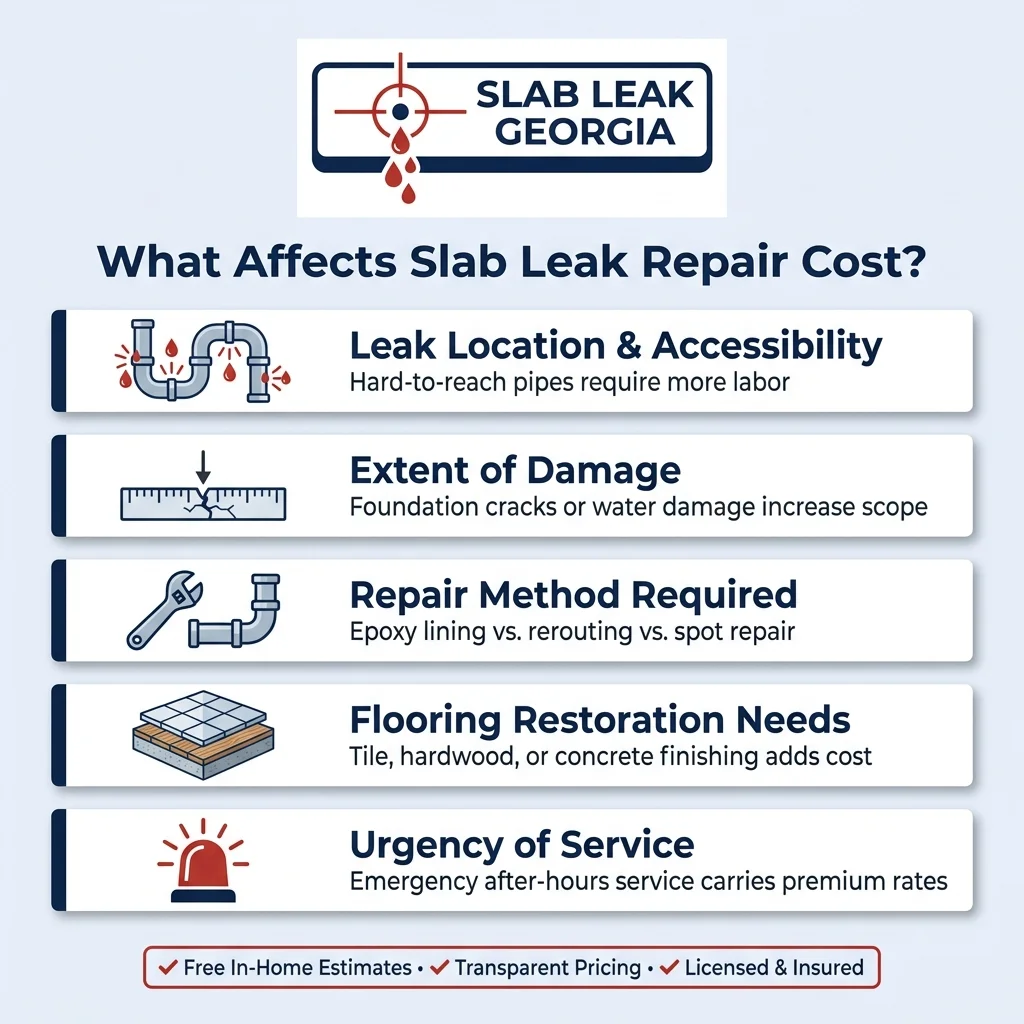
Slab Leak Repair Costs in Alpharetta, GA
No hidden fees. No surprise charges. Just honest pricing for quality slab leak services.
Leak Detection
- check_circleComplete home inspection
- check_circleAcoustic leak detection
- check_circleThermal imaging scan
- check_circlePressure testing
- check_circleWritten location report
- check_circleRepair estimate included
Spot Repair
- check_circleDetection included
- check_circleConcrete access & removal
- check_circlePipe repair or replacement
- check_circlePressure testing
- check_circleConcrete restoration
- check_circle1-year warranty
Complete Re-piping
- check_circleAll new water lines
- check_circleCeiling/wall routing (no slab)
- check_circleModern PEX materials
- check_circleFull system pressure test
- check_circleSame-day water restoration
- check_circle10-year warranty
Insurance & Financing Information
Many homeowners insurance policies cover the cost of accessing and repairing slab leaks. We provide detailed documentation for insurance claims. Ask about financing options for repairs not covered by insurance.
Factors affecting cost: Leak depth, accessibility, number of leaks, pipe material, foundation type, and chosen repair method. We provide written estimates before starting any work.
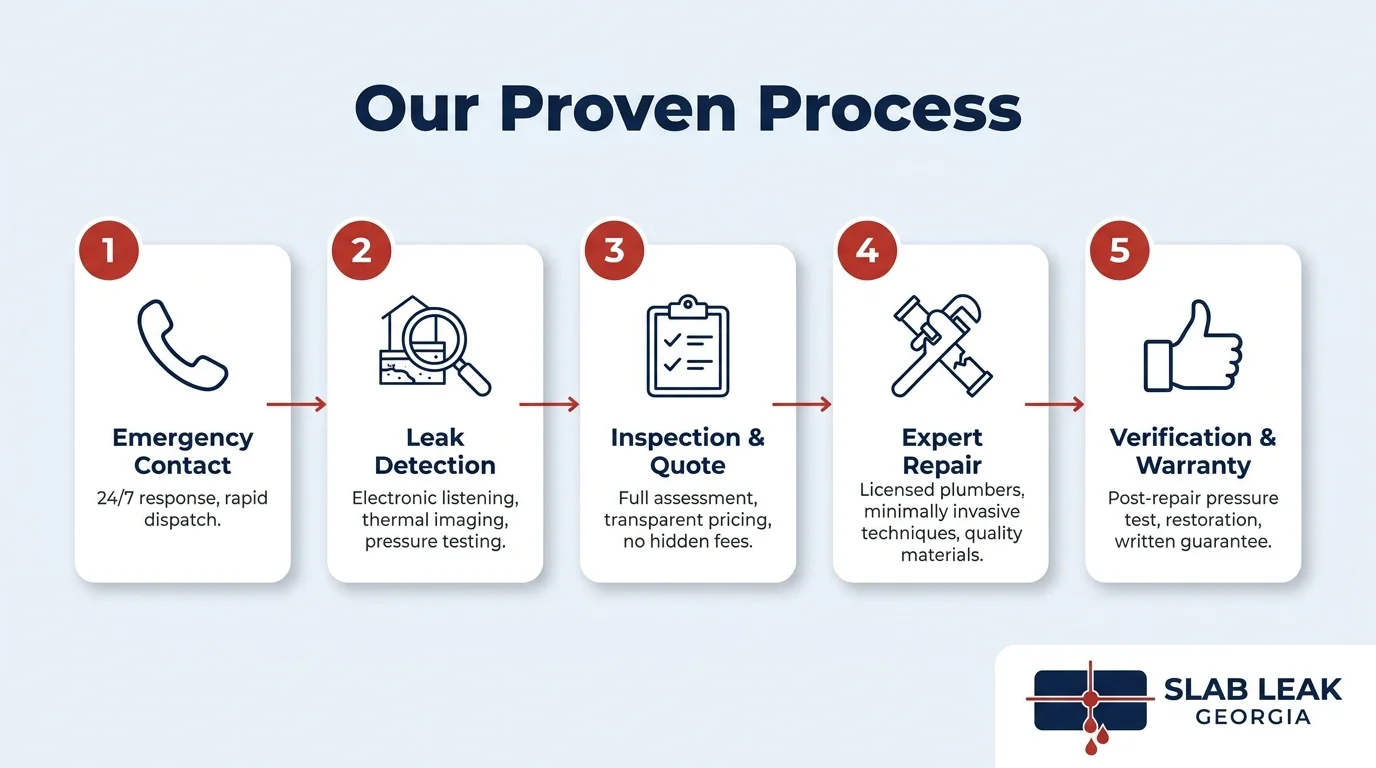
How Slab Leak Repair Works
From detection to repair, we make the process simple and stress-free for Georgia homeowners.
Call for Inspection
Contact us for a comprehensive slab leak inspection. We'll ask about symptoms and schedule a convenient time.
Electronic Detection
Our technicians use acoustic listening devices and thermal imaging to pinpoint the exact leak location without breaking concrete.
Repair Options & Estimate
We present all repair options with transparent pricing: spot repair, epoxy lining, or re-piping. You choose what's best for your home.
Expert Repair & Warranty
Licensed technicians complete foundation-safe repairs with minimal disruption. All work backed by comprehensive warranty.
Don't let an under-slab water leak in Alpharetta destroy your foundation. Fulton County's trusted slab leak specialists offer trenchless epoxy lining, spot repair, and complete repiping with full warranties. Call +1-866-779-0723 now — we answer 24/7.
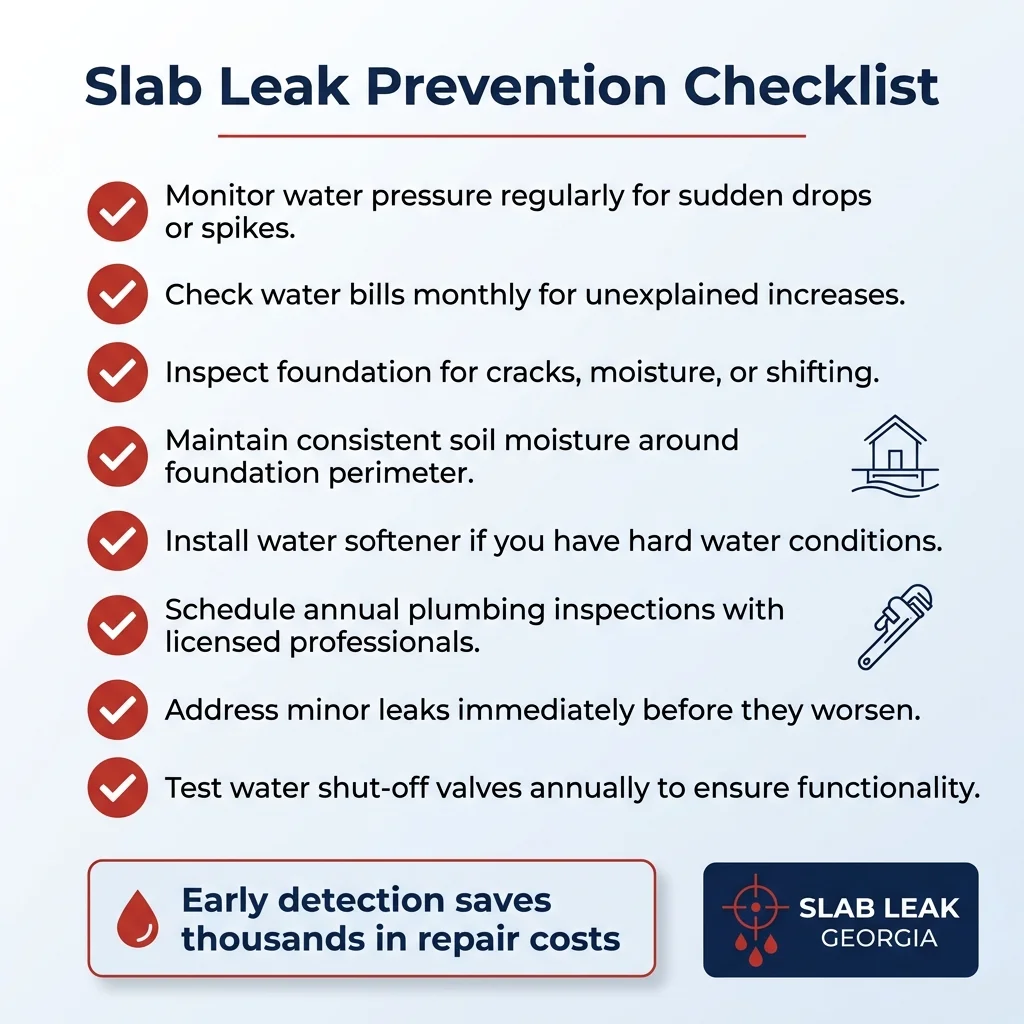
Slab Leak Prevention for Alpharetta Homes
Understand your risk factors and take action before a leak damages your foundation
Aging Copper Pipes
Homes built 1980-2000 with original copper plumbing are entering the 25-40 year failure window. If your home is in this range, annual pressure testing is recommended.
Expansive Clay Soil
Georgia's clay soil swells 10-15% when wet and shrinks when dry, bending rigid copper pipes with each cycle. Poor drainage around your foundation amplifies this stress.
Water Chemistry
Atlanta's moderately hard water (8-12 gpg) combined with chlorine creates internal pipe corrosion. High pressure above 80 PSI accelerates wear by 30-50%.
Prevention Strategies That Work
Why Professional Slab Leak Service Matters in Alpharetta
DIY attempts often cost more in the long run — here's the real comparison
DIY Attempt
- dangerousNo accurate detectionConsumer moisture meters can't sense through concrete. Exploratory holes cost $800-2,000 each.
- dangerousFoundation damage riskBreaking concrete without shoring causes slab sagging, wall cracks, and structural shifts.
- dangerousInsurance voidedDIY repairs are excluded from coverage. One attempt can void your entire claim.
- dangerousCode violationsFulton County requires licensed contractors for permits. Unpermitted work fines: $500-2,500.
Professional Service
- check_circleElectronic leak detectionPinpoints leaks within 1-2 feet without breaking concrete. No guessing, no exploratory holes.
- check_circleFoundation-safe repairsLicensed technicians use proper shoring and techniques that protect your home's structure.
- check_circleInsurance-compliantFull documentation, permits, and inspection reports support your claim if needed.
- check_circleCode-compliant + warrantedAll work permitted, inspected, and backed by warranty. Peace of mind included.
Alpharetta, Fulton County — licensed, insured, and ready to help
callCall +1-866-779-0723Licensed & Certified for Alpharetta
Every technician is a Georgia Master Plumber with credentials you can verify
Georgia Master Plumber
Licensed by the Georgia State Board of Construction Industry. Full compliance with all state and local requirements.
$1M+ Insured
Comprehensive general liability and workers' compensation insurance protects your home and our team.
Permits & Inspections
We handle all Alpharetta permit applications and coordinate required inspections. Code-compliant work guaranteed.

Workmanship Warranty
Every repair comes with a comprehensive warranty. If anything goes wrong, we fix it — no questions asked.
callCall +1-866-779-0723Slab Leak Warning Signs in Alpharetta
Most homeowners don't recognize slab leaks until foundation damage forces costly emergency repairs

thermostatHot or Warm Spots on Your Floor
MODERATEA hot water supply line is leaking directly beneath that spot — active pressurized leak losing 20-100 gallons/day
expand_more
Hot or Warm Spots on Your Floor
MODERATEA hot water supply line is leaking directly beneath that spot — active pressurized leak losing 20-100 gallons/day
Turn off all hot water fixtures and water heater. Wait 30 min, then feel the warm area. If it stays warm, it's a continuous leak.
$2,000-5,000 in foundation repairs + $1,500-4,000 mold remediation after 2-3 months.
receipt_longSudden Water Bill Increase
HIGH30-50%+ jump with no usage change means pressurized supply line leak running 24/7
expand_more
Sudden Water Bill Increase
HIGH30-50%+ jump with no usage change means pressurized supply line leak running 24/7
Turn off all fixtures. Watch your water meter for 30 min. If the dial moves, you have a leak. Document with video.
$30-75/month in wasted water for moderate leaks. $100-300/month for severe leaks losing 200+ gallons/day.
hearingSound of Running Water
HIGHAudible hissing or rushing sound when all fixtures are off — leak losing 50-200+ gallons/day
expand_more
Sound of Running Water
HIGHAudible hissing or rushing sound when all fixtures are off — leak losing 50-200+ gallons/day
Turn off main water valve. Wait 5 min. If sound stops, it's a supply line leak. Note where sound is loudest.
Foundation repairs $5,000-10,000 if you wait months. Immediate detection limits damage to pipe repair only.
crisis_alertFoundation Cracks
URGENTNew cracks or widening existing cracks = soil erosion under slab from active leak
expand_more
Foundation Cracks
URGENTNew cracks or widening existing cracks = soil erosion under slab from active leak
Mark cracks with tape and date. Measure width daily. Growth >1/8 inch per week = immediate action needed.
$5,000 crack injection to $20,000+ underpinning. Fix leak within days limits damage to $0-2,000.
speedLow Water Pressure
MODERATELarge leak diverting water or decades of mineral buildup restricting flow in aging pipes
expand_more
Low Water Pressure
MODERATELarge leak diverting water or decades of mineral buildup restricting flow in aging pipes
Attach pressure gauge to outdoor hose bib. Normal: 50-70 PSI. Below 40 PSI = problem. Test at different times of day.
Continued corrosion leads to imminent leaks. Emergency repairs cost premium rates vs. planned replacement.
waterStanding Water Around Foundation
URGENTWater pooling at foundation with no recent rain = 100-300+ gallons/day leak, immediate structural risk
expand_more
Standing Water Around Foundation
URGENTWater pooling at foundation with no recent rain = 100-300+ gallons/day leak, immediate structural risk
Mark wet area. Turn off main water overnight. If drier in morning, source is plumbing, not groundwater.
Foundation waterproofing $3,000-8,000 + pipe repair. Severe cases requiring underpinning reach $15,000-25,000.
airMold or Mildew Smell
HIGHMusty odor or visible mold from chronic moisture under flooring — leak active long enough for mold colonization
expand_more
Mold or Mildew Smell
HIGHMusty odor or visible mold from chronic moisture under flooring — leak active long enough for mold colonization
Document with photos. Don't touch mold — disturbing releases spores. Open windows. Call for detection.
Early: $500-2,000 cleanup. Spread through walls/HVAC: $5,000-15,000 comprehensive remediation.
speedWater Meter Spinning
HIGHMeter shows flow with all fixtures off — definitive proof of active leak. No other explanation
expand_more
Water Meter Spinning
HIGHMeter shows flow with all fixtures off — definitive proof of active leak. No other explanation
Turn off ALL water-using devices. Watch meter for 30 min. Any movement = leak. Document spin rate on video.
$150-400/month in wasted water. $900-2,400 over 6 months + potential foundation damage on top.
Don't wait for foundation damage — call now for professional leak detection in Alpharetta
callCall +1-866-779-0723Trusted by Alpharetta Homeowners
"They found our leak in under 2 hours without tearing up our whole kitchen floor. The price was exactly what they quoted — no surprises."
— Sarah M., Alpharetta
"Emergency call at midnight on a Sunday. They answered immediately and had someone here within 2 hours. Saved our home from major water damage."
— Mike R., Fulton County
Repair or Replace?
Answer 5 questions — we'll recommend the best option
Repair vs Replace Decision Tool
Should you repair the leak or re-pipe the entire system?
Common Questions from Alpharetta Residents
Frequently Asked Questions
Get answers to common questions about slab leak detection and repair in Alpharetta.
How much does slab leak detection cost in Alpharetta?
expand_more
Professional electronic leak detection typically costs $300-$600 in Alpharetta. This includes a complete inspection with thermal imaging and acoustic equipment to pinpoint the exact leak location without breaking concrete. Many your County homeowners find this investment prevents thousands in unnecessary foundation damage.
What are the warning signs of a slab leak?
expand_more
Common signs include: unexplained water bill increases, sound of running water when all fixtures are off, warm spots on floors, cracks in walls or floors, mildew or excessive moisture, reduced water pressure, and foundation shifting. If you notice any of these signs in your Alpharetta home, call immediately for inspection.
How long does slab leak repair take?
expand_more
Most slab leak repairs in Alpharetta are completed within 1-3 days depending on the repair method. Simple spot repairs may take 6-8 hours, while epoxy pipe lining can be done in 1-2 days. Complete re-piping typically requires 2-4 days. We provide accurate timelines after inspection.
Will my homeowners insurance cover slab leak repair?
expand_more
Many Alpharetta homeowners insurance policies cover the cost of accessing and repairing the leak itself, though not the damage caused by long-term leaks. Coverage varies by policy. We provide detailed documentation for insurance claims and work directly with adjusters in your County.
Can you detect a slab leak without breaking my floor?
expand_more
Yes! We use advanced electronic detection equipment including acoustic listening devices, thermal imaging cameras, and pressure testing to pinpoint leaks without damaging your Alpharetta home. We only break concrete at the exact leak location after confirming its position.
What causes slab leaks in Georgia homes?
expand_more
In Alpharetta, common causes include: shifting clay soil that stresses pipes, corrosion from Georgia's mineral-rich water, poor installation during construction, ground settlement, and pipe friction from expansion/contraction. Homes built before 1980 with copper pipes are especially vulnerable in your County.
Hiring a Slab Leak Contractor?
15 critical points to verify before you hire anyone
Contractor Verification Checklist
Use this checklist when hiring a slab leak contractor
badgeLicensing & Insurance
precision_manufacturingDetection Equipment & Methods
receipt_longPricing & Business Practices
history_eduExperience & Reputation
Recommended minimum: 12/15 checked before hiring

Don't Let a Slab Leak Destroy Your Alpharetta, GA Home
Every hour counts when you have an active foundation leak. Our licensed technicians respond fast with professional electronic detection and expert repairs that protect your home's structural integrity.